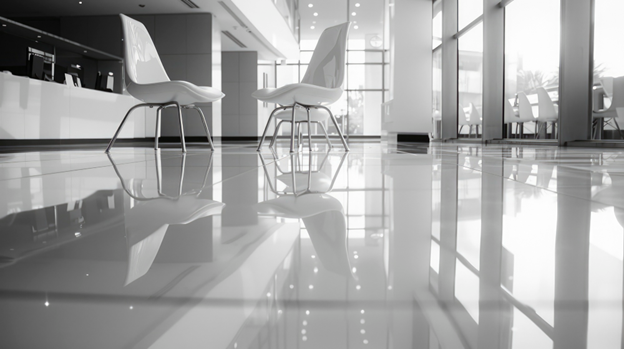
The choice between epoxy flooring and traditional flooring hinges on specific needs. Epoxy flooring services for homes are ideal for kitchens, garages, laundry rooms, and basements, as it gives a stain-resistant surface. Traditional flooring, however, is preferred for living spaces due to its warmth and homey appeal. Let’s delve into the key factors for flooring selection.
1. Durability and Longevity
Epoxy Flooring – Known for its durability and longevity, it often lasts 10–20 years in industrial environments when properly installed. Epoxy flooring withstands heavy impact, chemical spills, and constant traffic without cracking or peeling, and its non-porous surface prevents moisture damage and bacterial growth. A drawback is that it feels cold and hard on the feet and can scratch.
Traditional flooring – Materials like wood, tile, and vinyl have different lifespans but generally need repairs or replacements every 5–15 years. On the other hand, ceramic tile, natural stone, and solid hardwood will not degrade and can last a lifetime.
2. Cost and Maintenance
Epoxy Flooring – When it comes to epoxy flooring services pros and cons, hiring a professional ensures maximum durability, but it also comes with higher initial expenses due to surface preparation and expert application. An advantage is that it needs little upkeep and cleaning. On the flip side, it may eventually show scratches from pet claws and the dragging of furniture.
Traditional Flooring – The initial cost of this type of floor is much lower. However, the upkeep costs can add up. Carpets require steam cleaning, grout has to be sealed, and wooden floors need refinishing. There will also be repairs due to moisture, stains, or scratches to consider.
3. Aesthetic and Design Flexibility
Epoxy Flooring – This choice can be styled with numerous colors, patterns, and even 3D effects. A property owner can also imitate stone, marble, or incorporate images in the design. It gives the area a seamless, faithful design that’s true to its theme. One can embed logos and decals on the floor, plus create visual borders in the living space. Epoxy flooring is great for modern retail spaces and showrooms.
Traditional Flooring – Although it has limits, this pick offers timeless beauty. Vinyl can imitate wood or stone, while tile offers patterns and colors with grout lines, and hardwood delivers grain variations. Traditional flooring offers authentic visual depth with natural variations and character.
5. So, Which Is Better?
The priorities of a homeowner will determine the outcome. Epoxy flooring is perfect for garages, warehouses, and contemporary business areas because of its exceptional durability, low maintenance requirements, and seamless design. On the other hand, traditional flooring gives homes classic beauty and warmth.
Epoxy is superior if durability and impact resistance are the most important factors. Nonetheless, traditional is still better for household comfort and natural aesthetics. Choose according to the surroundings and long-term functional requirements. It will really be based on the property owner’s vision.
The Right Fit
Neither epoxy flooring nor traditional flooring is infinitely superior. More than durability, cost, and maintenance, it will all depend really on one’s personal preferences. Ultimately, the flooring that fits your lifestyle is the best option. If you’re on the hunt for epoxy flooring services for homes, get in touch with us at Island Wide Resins. Call 808-769-0977.